Scrum Master to Product Owner: What Changes and How to Prepare
A role-fit check for Scrum Masters considering Product Owner accountability, with the decisions that change and an illustrative 30-day practice plan.
On this page
Last reviewed:
A move from Scrum Master to Product Owner changes the kind of responsibility you hold: it is a shift in focus, not a promotion or a lateral change in title. That difference shapes the transition. You may already understand the team's context and facilitate useful conversations, helping you notice where delivery gets stuck. As Product Owner, you make choices that need a rationale and may need to change as their consequences become clearer.
What carries over from Scrum Master work
Several capabilities travel well. Scrum Masters often learn to make work and impediments visible, help people question their assumptions, and use inspection and adaptation. They may also understand how stakeholders relate to both the team and the product better than someone arriving from outside.
These capabilities help a Product Owner navigate uncertainty, while the Product Owner remains accountable for decisions. Facilitation can help a group explore options, but product accountability eventually calls for a clear ordering decision and a rationale others can understand. The move is worth considering when you are interested in the product questions behind the team's work as well as improving the conditions in which that work happens.
What changes when you become the Product Owner
The Scrum Guide assigns the Scrum Master accountability for establishing Scrum and the Scrum Team's effectiveness, while the Product Owner is accountable for maximizing product value and managing the Product Backlog effectively. The Product Owner develops and explicitly communicates the Product Goal, creates and clearly communicates Product Backlog items, orders them, and ensures that the Product Backlog is transparent, visible, and understood. Work may be delegated, while accountability for these outcomes stays with the Product Owner.
In practice, the center of attention shifts: a Scrum Master might help the Scrum Team inspect whether a Sprint is producing useful learning, while a Product Owner uses that learning to decide what to pursue now and what new evidence could justify a change. The Product Goal examples show how a shared product objective gives the Product Owner a reference point for deciding what to pursue. The Product Backlog examples make the next part of that decision visible: its evolving, ordered options express current direction while allowing scope to respond as the team learns and new evidence may justify a change.
The harder shift: owning a trade-off
Imagine a product that helps independent retailers manage online orders. Support requests show that merchants struggle to correct delivery addresses after an order is placed, while several larger retailers ask for a way to export weekly fulfillment data.
Both problems could be considered for the next Product Backlog ordering decision. The Scrum Master can help the people involved investigate what is known, including the constraints and assumptions shaping the choice. The Product Owner remains accountable for deciding what the product should pursue first, drawing on evidence and collaboration with stakeholders and the Scrum Team, then making the reasoning open to inspection.
Suppose the Product Owner learns that address corrections are causing cancelled orders across the current customer base, while the export request is important to a small group of larger prospects. They might focus first on a safer address-change flow linked to a Product Goal, while keeping the export work visible in the Product Backlog with its current order and rationale. New evidence may later change that choice, and the responsibility is to make the trade-off using the best available evidence, even when people do not all agree.
This can be the uncomfortable part of the transition: product decisions rely on incomplete information. A Product Owner invites challenge and uses evidence, while keeping product direction clear enough to guide work when people disagree.
A role-fit check before changing jobs
Before accepting a Product Owner role, examine the work you want to take on. These questions help reveal where you need more exposure before changing roles; use them to guide reflection, not as a score.
- Do you want regular contact with customers, users, and stakeholders who can inform product choices?
- Are you interested in the commercial and operational context that shapes product value?
- Can you say no or not now to a worthwhile request and explain the ordering decision?
- Are you willing to make a decision visible, hear criticism, and revise it when evidence changes?
- Do you enjoy turning a broad opportunity into a Product Goal that guides near-term choices?
- Does the organization give the Product Owner enough authority and access to make product decisions meaningful?
Pay particular attention to the last question: you may be ready for the accountability while the organization keeps product choices elsewhere. Clarify who can make ordering and product-direction decisions before relying on the job title as evidence that the role has changed.
A 30-day transition plan
A short period of deliberate practice can expose the decisions behind the role and help you learn whether this work fits before pursuing a new title.
Week 1: Observe current product decisions. Follow a Product Owner as they decide what to explore, order, defer, or stop, and write down the evidence they use, the stakeholders involved, and the decisions that remain unclear.
Week 2: Learn from the product context. Join conversations with customers or stakeholders where appropriate, then ask the current Product Owner how those conversations affect the Product Goal and Product Backlog. Listen for the trade-offs as well as the requests.
Week 3: Propose a small direction. Take one bounded product opportunity and draft a Product Goal and an ordering rationale for discussion with the current Product Owner. Explain what you expect to learn and what evidence could change the order; frame this as a proposal so the current Product Owner retains the accountability and authority to decide.
Week 4: Inspect the decision with the team. Review the proposal with the current Product Owner and relevant members of the Scrum Team, asking for feedback on the choice, the evidence, and the rationale. Feedback on facilitation helps, while product accountability calls for carrying the decision itself.
This plan offers one illustrative way to practise the work. It can help you decide what to learn next, although readiness also depends on local conversations before a job change.
Choose a learning step after the fit check
If the role-fit questions and practice period confirm that you want to deepen your Product Owner work, structured learning can give you a focused setting to examine how Product Goals and Product Backlog management inform stakeholder decisions about value. Agile Way's Professional Scrum Product Owner training is a relevant next step for people who want guided practice in those areas.
Training remains optional; the role's trade-offs are part of the work. Comparing decisions with others can help you name the accountabilities and develop better questions for your own context. You can view the course schedule when you are ready to explore the available options.
Frequently asked questions
Keep learning

Guide
Product Backlog Refinement with AI: Tools and Techniques
Use AI to refine Product Backlog items: expose ambiguity, split work, draft acceptance criteria, and check dependencies, while keeping decisions with the Product Owner and team.

Reference
Evidence-Based Management (EBM) for Product Owners: Guide and Examples
Evidence-Based Management connects organizational direction to measurable outcomes. This guide helps Product Owners use leading and lagging indicators, the four Key Value Areas, a lightweight decision record, and worked examples to turn evidence into product decisions.
Guide
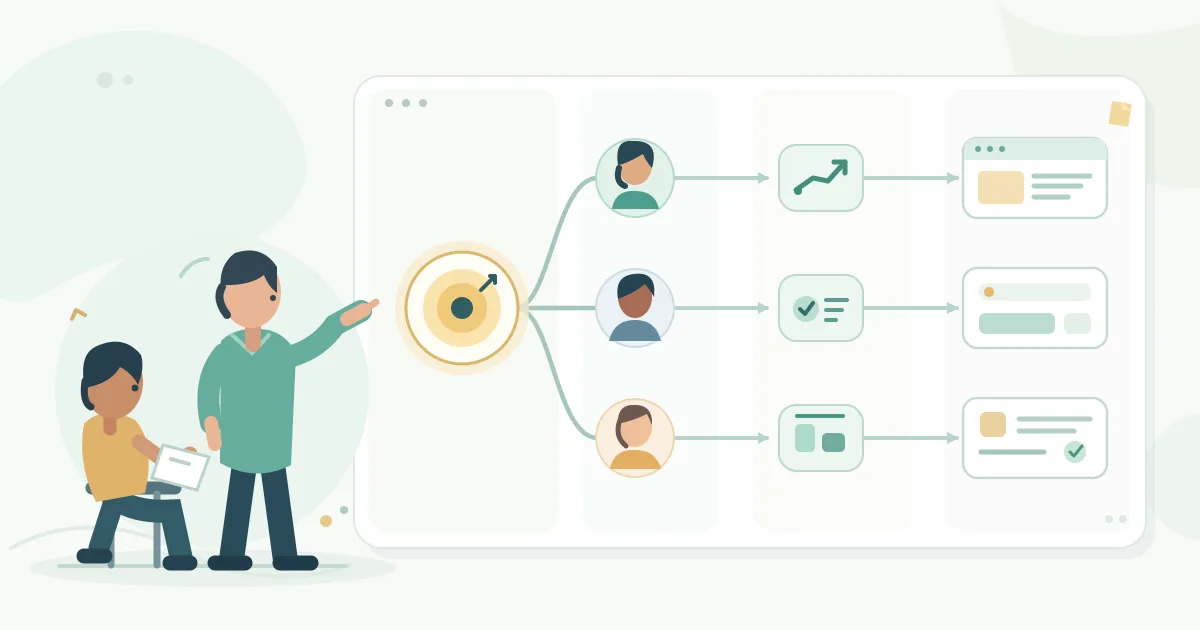
Impact Mapping: From Stakeholder Requests to Testable Outcomes
A Product Owner guide to turning stakeholder requests into outcome hypotheses before deciding what to investigate for Product Backlog choices.
Ready to go beyond the guide?
Take the next step with hands-on Professional Scrum training led by an experienced trainer.